Knowledge That Stays in Your Bones
Once you’ve bankrupted a company in a business simulation, you don’t forget it. Not because it was embarrassing – but because it felt real. Your pulse rises, discussions get heated, and suddenly you understand what “liquidity crunch” actually means.
Business simulations are not games. They are controlled reality. A safe space where mistakes are not only allowed but welcomed – because you learn from them without causing real damage.
The Science Behind It
The research is clear: experiential learning leads to deeper understanding and better retention than purely cognitive knowledge transfer. David Kolb described this back in the 1980s, and studies have consistently confirmed it since: when people actively engage, reflect, and try again, what they learn sticks.
In a business simulation, that’s exactly what happens. Participants make decisions under uncertainty, experience the consequences, and must adapt their strategy. This cycle of action and reflection is the core of effective professional development.
What Sets Simulations Apart from Role-Play
Role-plays simulate social situations. Business simulations simulate systems. In a good simulation, you feel how decisions in one area ripple through to entirely different ones. Marketing affects production. Investments strain liquidity. Hiring decisions only show their impact quarters later.
This interconnectedness is what makes simulations so valuable. They mirror the complexity that leaders face daily – and give them the opportunity to navigate it in a safe environment.
The Moment It “Clicks”
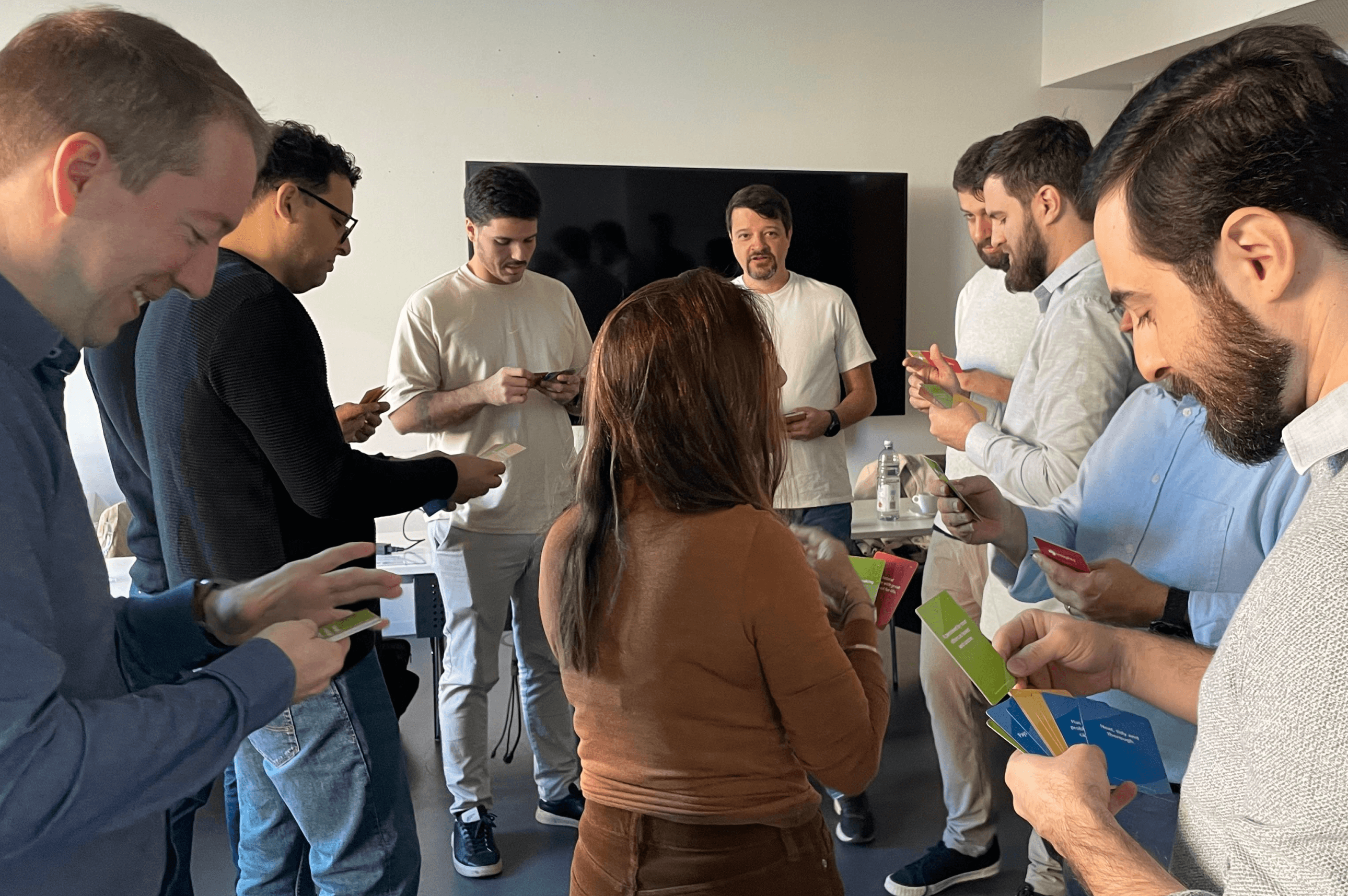
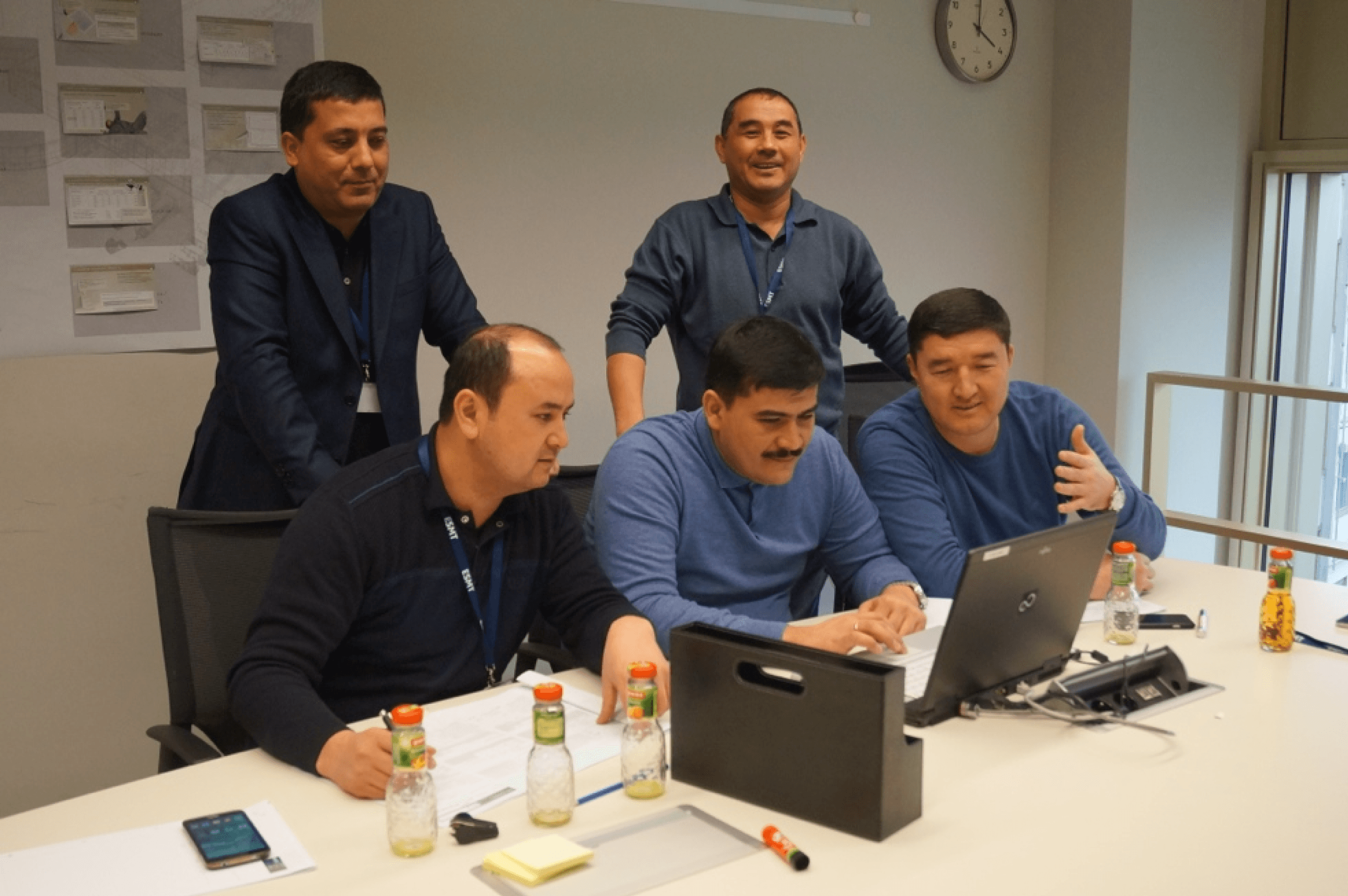
Every facilitator knows this moment. The group is deep in a heated debate, someone proposes a risky strategy, others hesitate – and then someone says: “Wait, this is exactly what happens in our real project.”
That transfer moment is priceless. It connects the simulation to reality and turns a game into a genuine learning experience. And that’s precisely what we design our simulations for: not as entertainment, but as a bridge between theory and practice.
Conclusion
Business simulations work because they engage the whole person – head, heart, and hands. They create experiences that last and insights that flow back into daily work. Once you’ve felt what strategic thinking is like, you no longer need a PowerPoint slide to understand it.